
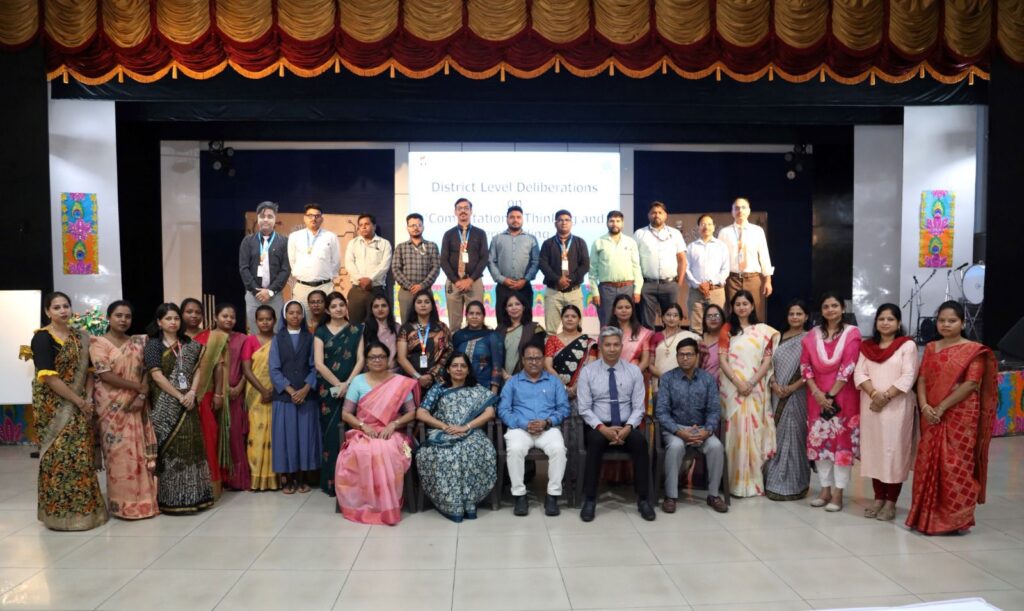
भविष्योन्मुखी शिक्षा को नई दिशा प्रदान करते हुए, सरला बिरला पब्लिक स्कूल, रांची ने आर्टिफिशियल इंटेलिजेंस (ए.आई.) और कम्प्यूटेशनल थिंकिंग (सी.टी.) पर एक जिला-स्तरीय संगोष्ठी (डी.एल.डी.) का भव्य आयोजन किया। इस बौद्धिक समागम में रांची के विभिन्न सीबीएसई बोर्ड से संबद्ध विद्यालयों के प्रबुद्ध शिक्षकों, संस्था प्रमुखों और शिक्षाविदों ने सक्रिय भागीदारी निभाई। यह कार्यक्रम मुख्य रूप से ‘सी.टी. और ए.आई. में मूल्यांकन व शिक्षण पद्धति‘ तथा ‘ए.आई. का नैतिक एवं जिम्मेदार उपयोग‘ जैसे अत्यंत प्रासंगिक विषयों पर केंद्रित रहा, जिसने शिक्षकों को नवाचारी रणनीतियों को साझा करने और कक्षाओं में इन भविष्योन्मुखी कौशलों को एकीकृत करने का एक सशक्त मंच प्रदान किया।
आयोजन का मुख्य उद्देश्य शिक्षकों को उन आधारभूत क्षमताओं से लैस करना था, जिनसे वे विद्यार्थियों में कम्प्यूटेशनल थिंकिंग और आर्टिफिशियल इंटेलिजेंस की समझ को विकसित कर सकें। इक्कीसवीं सदी की बदलती जरूरतों को दृष्टिगत रखते हुए, इस संगोष्ठी में तर्कक्षमता, रचनात्मकता और समस्या-समाधान जैसे कौशलों के पोषण पर बल दिया गया। चर्चाओं में इस बात पर विशेष जोर दिया गया कि कैसे अंतर्विषयक दृष्टिकोण अपनाकर और प्रौद्योगिकियों के नैतिक उपयोग के साथ शिक्षा को अधिक सार्थक, व्यावहारिक और भविष्य के अनुकूल बनाया जा सकता है।
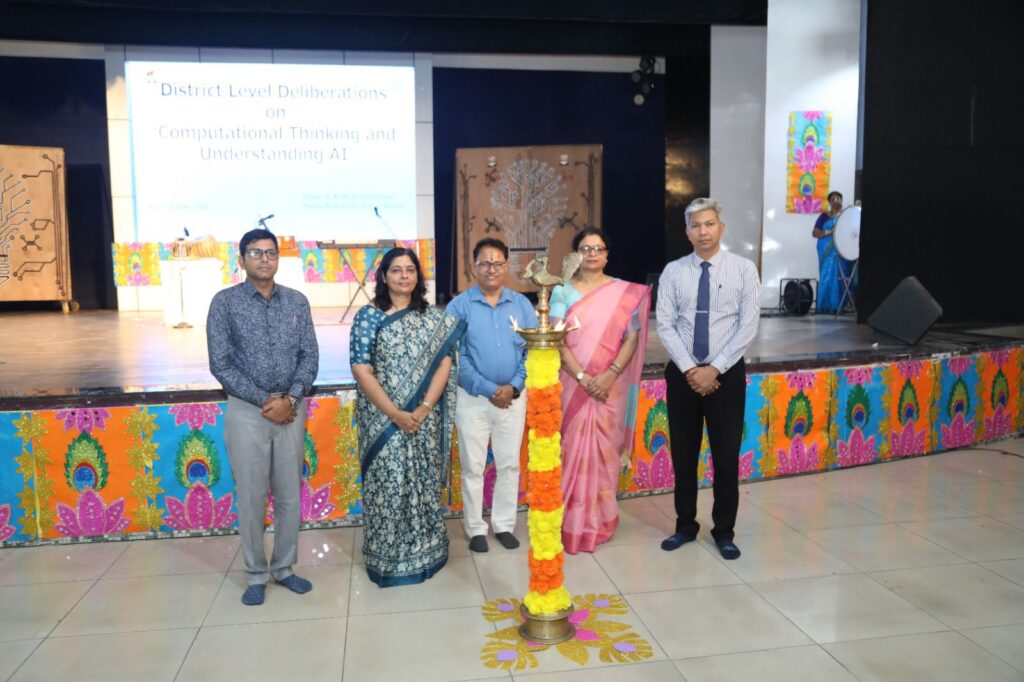
कार्यक्रम का विधिवत उद्घाटन विशिष्ट अतिथियों द्वारा दीप प्रज्ज्वलन के साथ हुआ। तत्पश्चात, विद्यालय के संगीत विभाग द्वारा प्रस्तुत मधुर स्वागत गान ने उपस्थित जनसमूह को मंत्रमुग्ध कर दिया और अतिथियों का गर्मजोशी से अभिनंदन किया गया। कार्यक्रम की शोभा प्रख्यात शिक्षाविदों और शैक्षणिक नेताओं ने बढ़ाई। मुख्य वक्ता और मुख्य अतिथि सरला बिरला विश्वविद्यालय के रजिस्ट्रार, प्रो. एस. बी. दंडिन थे। वे मल्टी-डायमेंशनल डेटा के कॉम्पैक्ट विजुअलाइजेशन के विशेषज्ञ हैं और डेटा स्ट्रक्चर्स, कंपाइलर डिजाइन, डेटा एनालिटिक्स, पायथन और ऑब्जेक्ट-ओरिएंटेड प्रोग्रामिंग में गहरी विशेषज्ञता रखते हैं। मूल्यांकन समिति के विशेषज्ञों में जी.डी. गोयनका पब्लिक स्कूल, रांची के प्रिंसिपल डॉ. सुनील कुमार, मनन विद्या स्कूल, रांची की प्रिंसिपल श्रीमती रेखा नायडू और सरला बिरला विश्वविद्यालय के आर्टिफिशियल इंटेलिजेंस, मशीन लर्निंग और स्पीच टेक्नोलॉजी विभाग के सहायक प्रोफेसर डॉ. बिस्वजीत करण शामिल थे।
संबोधन के क्रम में सरला बिरला पब्लिक स्कूल की प्राचार्या श्रीमती मनीषा शर्मा ने समकालीन शिक्षा में आर्टिफिशियल इंटेलिजेंस और कम्प्यूटेशनल थिंकिंग की अपरिहार्यता को रेखांकित किया। उन्होंने अपने ओजस्वी वक्तव्य में कहा कि तकनीकी प्रगति की तेज गति के साथ शैक्षिक प्रतिमानों में परिवर्तन अनिवार्य है। उन्होंने जोर दिया कि ए.आई. और सी.टी. न केवल विद्यार्थियों को कुशल समस्या-समाधानकर्ता बनाते हैं, बल्कि उन्हें एक उत्तरदायी डिजिटल नागरिक के रूप में भी गढ़ते हैं। उन्होंने स्पष्ट किया कि हमारा लक्ष्य छात्रों को भविष्य के लिए केवल तैयार करना नहीं, बल्कि उन्हें आत्मविश्वास, संवेदनशीलता और रचनात्मकता के साथ भविष्य का निर्माण करने में सक्षम बनाना है।
प्रो. एस. बी. दांडिन ने छात्रों में विश्लेषणात्मक तर्कशक्ति और नवाचार को पोषित करने पर बल दिया और शिक्षकों को कक्षाओं में समस्या-समाधान की क्षमता विकसित करने हेतु प्रोत्साहित किया। संगोष्ठी के दौरान कुल 13 शोध-पत्र प्रस्तुत किए गए, जिनमें स्कूली शिक्षा में ए.आई. और सी.टी. के प्रभावी एकीकरण पर आधारित साक्ष्य-प्रधान प्रयोगों को साझा किया गया। लगभग 35 प्रतिभागियों की उपस्थिति में हुई यह चर्चा अंतर्विषयक शिक्षा और प्रोजेक्ट-आधारित सीखने की पद्धतियों पर केंद्रित रही। सराहना समिति द्वारा चयनित सर्वश्रेष्ठ शोध-पत्रों को आगामी कार्यवाही हेतु सेंटर ऑफ एक्सीलेंस (सी.ओ.ई.) के पास भेजा जाएगा।
डॉ. सुनील कुमार ने विभिन्न विषयों के साथ ए.आई. के सार्थक समामेलन को भविष्य की आवश्यकता बताया। डॉ. बिस्वजीत करण ने शिक्षा में मानवीय संवेदनाओं, नैतिकता और सहानुभूति को केंद्र में रखते हुए उभरती प्रौद्योगिकियों को अपनाने की वकालत की। यह जिला-स्तरीय संगोष्ठी सहयोगात्मक चिंतन और भविष्य के शैक्षिक रोडमैप के निर्धारण के साथ संपन्न हुआ, जिसने एक ऐसे समावेशी और प्रगतिशील शिक्षण वातावरण के निर्माण की प्रतिबद्धता को सुदृढ़ किया, जो विद्यार्थियों को इस तकनीक-संचालित युग में नई ऊंचाइयां छूने के लिए प्रेरित करेगा।
Shaping Future-Ready Education: SBPS Hosts District-Level Deliberation on Artificial Intelligence and Computational Thinking
Sarala Birla Public School, Ranchi, successfully organised a District-Level Deliberations (DLD) on Computational Thinking (CT) and understanding Artificial Intelligence (AI), bringing together educators, school leaders and academicians from CBSE schools across Ranchi. Centred on two sub-themes- first one being Assessment and Pedagogy in CT and the other AI and Ethics and Responsible Use of AI, the deliberation provided a dynamic platform for educators to exchange ideas, share innovative practices and explore effective strategies for integrating Computational Thinking and Artificial Intelligence into their current pedagogical practices.
The District-Level Deliberation was organised with the objective of empowering educators to cultivate foundational competencies in Computational Thinking and Artificial Intelligence among learners. Recognising the growing significance of these future-focused disciplines in 21st-century education, the deliberation explored innovative strategies for integrating CT and AI across the curriculum to foster critical thinking, creativity, problem-solving and innovation. The discussions also emphasised the importance of the ethical and responsible use of emerging technologies, enabling educators to create meaningful, interdisciplinary and real-world learning experiences that equip students with the knowledge, skills and values required to thrive in an increasingly digital and evolving world.
The event was graced by distinguished academicians and educational leaders. The keynote speaker and the chief guest of the event was Prof. S. B. Dandin, Registrar, Sarala Birla University. He is an expert in the field of compact visualization of multidimensional data, with expertise in Data Structures, Compiler Design, Data Analytics, Python, and Object-Oriented Programming.
The experts of the appreciation committee included Dr. Sunil Kumar, Principal, G.D. Goenka Public School, Ranchi; Mrs. Rekha Naidu, Principal, Manan Vidya School, Ranchi; Dr. Bishwajit Karan, Assistant Professor, Department of Artificial Intelligence, Machine Learning and Speech Technology, Sarala Birla University.
The programme commenced with the ceremonial lighting of the lamp by the distinguished dignitaries, symbolising the pursuit of knowledge and enlightenment. This was followed by a melodious welcome song presented by the music department, setting a warm and inspiring tone for the deliberation. The guests were felicitated and warmly welcomed to the gathering.
Addressing the participants, Principal Mrs. Manisha Sharma highlighted the growing significance of Artificial Intelligence and Computational Thinking in contemporary education. She remarked that the rapid advancement of technology demands a corresponding transformation in educational practices and emphasised that AI and CT empower learners to become innovative problem-solvers and responsible digital citizens. She further stated that by fostering interdisciplinary learning, ethical awareness and real-world application of knowledge, schools can prepare students not merely to adapt to the future but to shape it with confidence, creativity and compassion.
Addressing the gathering, Prof. S. B. Dandin emphasised the importance of cultivating computational thinking among students to prepare them for the rapidly evolving technological landscape and encouraged educators to nurture innovation, analytical reasoning and problem-solving abilities in their classrooms.
A total of 13 case-paper presenters shared innovative, evidence-based classroom practices and research-driven approaches demonstrating the effective integration of Artificial Intelligence and Computational Thinking in school education. The presentations revolved around interdisciplinary learning, project-based approaches and real-world applications of technology in education.
Around 35 educators and participants attended the deliberation, engaging in meaningful discussions on future-ready pedagogical practices. The jury members enriched the session with their valuable insights. Dr. Sunil Kumar highlighted the need to meaningfully integrate Artificial Intelligence and Computational Thinking across disciplines, enabling students to become critical thinkers and future-ready learners. Dr. Bishwajit Karan underscored the transformative potential of Artificial Intelligence in education and stressed the importance of its ethical and responsible application. He encouraged educators to embrace emerging technologies while ensuring that human values, creativity and empathy remain central to the learning process. The three best case papers, as evaluated by the appreciation committee, will be forwarded to the Centre of Excellence (CoE) for further consideration.
The deliberation concluded with insightful interactions and collaborative reflections among participants, reaffirming a collective commitment to fostering ethical, innovative and future-ready learning environments that empower students to thrive in an increasingly technology-driven world